- Understanding Tow Straps and Their Importance
- Preparing for Safe Towing
- Step-by-Step Guide to Using a Tow Strap Safely
- Common Mistakes to Avoid When Using a Tow Strap
- Real-Life Examples Highlighting Tow Strap Safety
- Professional Advice and Resources
1. Understanding Tow Straps and Their Importance
Tow straps are essential tools designed to assist in vehicle recovery and towing situations. Unlike chains or ropes, tow straps are made from strong synthetic materials such as nylon or polyester, which provide both flexibility and durability. Their strength lies in their ability to stretch slightly, absorbing shock loads when towing, thereby reducing the risk of damage to either vehicle.
Knowing how to use a tow strap safely is not just about connecting two vehicles—it’s about protecting both vehicles and ensuring the safety of everyone involved. Improper use can lead to strap failure, vehicle damage, or even dangerous accidents on the road. This is why understanding the purpose, limitations, and correct application of tow straps is crucial before attempting any towing task.
United Towing Service Inc.
26170 Adams Ave, Murrieta, CA 92562, USA
Types of Tow Straps
Tow straps vary based on material strength, length, and load capacity. Choosing the right strap depends on the weight of the vehicle being towed and the type of towing operation. For instance, heavy-duty straps are necessary for towing larger vehicles like trucks or SUVs, whereas lighter vehicles may require less robust options.
Knowing these distinctions helps you select the proper equipment, a vital first step for anyone learning how to use a tow strap safely.

J & J Towing
4560 N Webster Ave, Perris, CA 92571, USA
2. Preparing for Safe Towing
Preparation is the foundation of safe towing. Before hooking up a tow strap, inspect both the strap and the vehicles involved:
Inspecting the Tow Strap
Check the strap for signs of wear and tear such as fraying, cuts, or weak spots. Even minor damage can compromise the strap's integrity and cause failure under load. Additionally, verify the strap’s rated load capacity to ensure it matches or exceeds the weight of the vehicle being towed.
Vehicle Hook Points
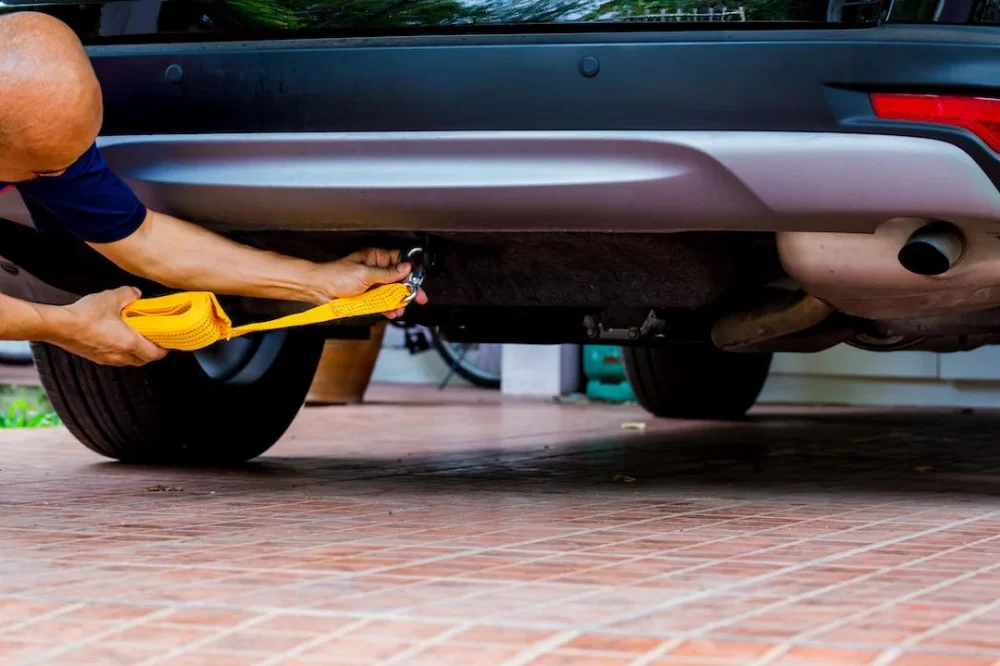
Both vehicles must have proper tow points designed to handle the stresses of towing. Never attach the strap to parts like bumpers, axles, or suspension components that are not designed for towing. Instead, use designated tow hooks or recovery points, usually located at the front or rear of vehicles.
Clear Communication
Before beginning the tow, establish clear signals or communication methods between drivers. This coordination helps prevent sudden movements that could snap the strap or cause accidents.
3. Step-by-Step Guide to Using a Tow Strap Safely
Executing the towing operation correctly ensures safety and efficiency. Here is a detailed stepwise process for how to use a tow strap safely:
Step 1: Positioning the Vehicles
Align the towing vehicle and the vehicle to be towed in a straight line. This reduces lateral stress on the strap and makes the towing process smoother. Ensure enough space between vehicles to prevent contact but short enough to maintain control.
Step 2: Attaching the Tow Strap
Securely attach the tow strap to the tow points of both vehicles. Avoid tying knots in the strap as this can weaken its strength. Use the provided hooks or loops designed for towing.
Step 3: Testing the Connection
Before moving, gently pull the towing vehicle forward to take up slack in the strap. This step helps confirm the strap is securely fastened and not twisted or tangled.
Step 4: Controlled Towing
The towing vehicle should accelerate slowly and maintain steady speed. Sudden acceleration or braking can cause jerks that strain the tow strap, potentially causing it to snap. The driver of the towed vehicle should steer and brake carefully, following the lead vehicle’s movements.
Step 5: Monitoring Throughout the Tow
Continuously monitor the strap and the connection points during towing. If any unusual noises, stretching, or slack occurs, stop immediately and inspect for issues.
4. Common Mistakes to Avoid When Using a Tow Strap
Many towing accidents arise from avoidable errors. Being aware of these pitfalls enhances your safety dramatically:
Using the Wrong Equipment
Choosing an undersized or damaged strap is a common mistake that can lead to strap failure. Always select a tow strap rated above the weight of the vehicle being towed.
Improper Attachment Points
Attaching the strap to unsuitable parts of the vehicle can cause damage or even detach the strap mid-tow. Only use manufacturer-recommended recovery points.
Ignoring Communication
Failure to coordinate between drivers can cause sudden jerks or unsafe movements. Clear signals or walkie-talkies are advisable for long-distance or complicated towing situations.
Driving Too Fast or Abruptly
Rapid acceleration, hard braking, or sharp turns put excessive stress on the strap and vehicles. Maintain a slow, steady pace during the tow.
5. Real-Life Examples Highlighting Tow Strap Safety
Consider the story of a weekend off-roader who got stuck in mud during a trail drive. Using an old, frayed tow strap, the strap snapped when the towing vehicle accelerated too quickly, leaving both vehicles stranded and causing minor damage. This incident highlights how critical it is to inspect tow straps before use and apply controlled towing techniques.
In contrast, a professional towing service used a high-quality strap and followed strict safety protocols to pull a stranded vehicle from a steep ditch. They communicated continuously, secured proper attachment points, and maintained steady tension on the strap, resulting in a smooth and damage-free recovery.
These contrasting cases demonstrate why learning how to use a tow strap safely is vital—not only for personal safety but also for vehicle preservation.
6. Professional Advice and Resources
For those frequently involved in vehicle recovery or towing, consulting professionals or reliable sources is invaluable. Websites like Rescue & Towing offer expert advice, high-quality tow straps, and professional-grade equipment that meet stringent safety standards.
Whether you’re an off-roading enthusiast or need occasional roadside assistance, sourcing products and services from trusted providers like Rescue & Towing can significantly enhance your safety and confidence during towing operations.
Remember, investing time in learning proper tow strap usage and preparing thoroughly can prevent costly mistakes and dangerous situations on the road.