- 1‑what‑is‑the‑egr‑valve‑and‑why‑it‑matters
- 2‑understanding‑how‑the‑egr‑valve‑position‑sensor‑works
- 3‑common‑symptoms‑of‑a‑faulty‑egr‑valve‑position‑sensor
- 4‑how‑to‑read‑egr‑valve‑position‑sensor‑output‑values
- 5‑diagnosing‑and‑fixing‑egr‑related‑issues
- 6‑real‑life‑failure‑case‑from‑the‑roadside
- 7‑getting‑help‑from‑rescue‑and‑towing‑when‑sensors‑fail
1. What Is the EGR Valve and Why It Matters
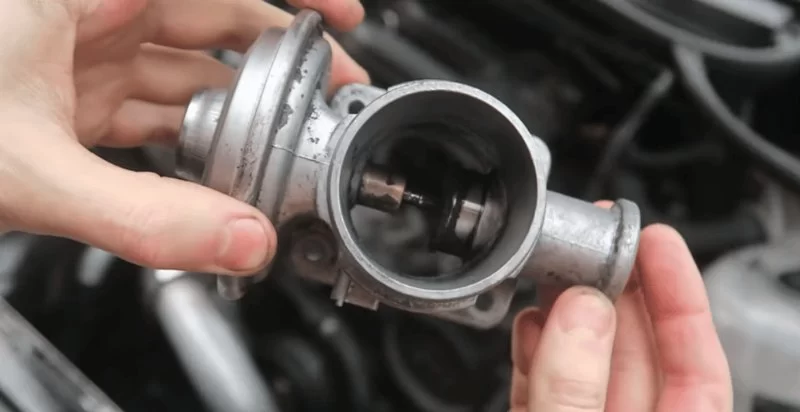
The Exhaust Gas Recirculation (EGR) valve is a critical component in your car’s emissions system. Its primary function is to recirculate a portion of exhaust gases back into the engine’s intake to reduce nitrogen oxide (NOx) emissions. This not only helps your vehicle comply with emission standards but also plays a role in improving fuel economy and engine longevity. Without a functioning EGR system, your car might experience rough idling, increased fuel consumption, or even fail an emissions test.

Pick Your Part - Help Yourself
1232 Blinn Ave, Wilmington, CA 90744, USA
2. Understanding How the EGR Valve Position Sensor Works
The EGR valve position sensor monitors the valve’s position and reports it back to the engine control unit (ECU). The ECU uses this data to determine how much exhaust gas is being recirculated at any given moment. If the valve is stuck open or closed—or if the sensor provides inaccurate data—your engine may experience performance issues or trigger a check engine light. The sensor typically sends a voltage signal that corresponds to the position of the valve, often ranging between 0.5 to 4.5 volts.

Pick Your Part - Greer
13054 E Wade Hampton Blvd, Greer, SC 29651, USA
3. Common Symptoms of a Faulty EGR Valve Position Sensor
When the EGR valve position sensor fails or behaves erratically, it can cause a range of noticeable issues. Common signs include:
- Check engine light: This is often the first indication, usually with a code like P0405 or P0406.
- Rough idling or stalling: Due to excessive or insufficient exhaust gas flow.
- Engine knocking: Caused by improper combustion from incorrect air-fuel ratios.
- Poor acceleration: A clogged or malfunctioning EGR system reduces engine responsiveness.
Knowing these symptoms can help you spot a failing sensor early and avoid costly damage.
4. How to Read EGR Valve Position Sensor Output Values
Reading your EGR valve position sensor output requires an OBD-II scanner or a multimeter connected to the sensor wires. In a properly functioning system:
- At idle, the EGR valve should be mostly closed, typically sending a low voltage (around 0.5–1.0V).
- During acceleration or highway cruising, the valve opens more, increasing the voltage output (2.0–4.5V).
Inconsistent readings—like no voltage change under varying engine loads—often indicate a stuck valve or faulty sensor. Be sure to compare readings to your vehicle’s service manual specifications for accuracy.
5. Diagnosing and Fixing EGR-Related Issues
Here are steps to diagnose and correct EGR valve or sensor issues:
- Use a scan tool to retrieve error codes related to the EGR system.
- Visually inspect the EGR valve and sensor wiring for damage or corrosion.
- Check voltage output at various engine conditions using a digital multimeter.
- If the valve is clogged with carbon, remove and clean it using throttle body cleaner.
- If cleaning doesn’t help and voltage readings remain off, replace the sensor or the entire EGR valve assembly.
Routine maintenance can prevent most EGR-related breakdowns. If unsure, consult a technician or trusted platform like Rescue & Towing for a diagnostic check.
6. Real-Life Failure Case from the Roadside
In Arizona, a client’s 2014 Ford F-150 stalled repeatedly on the highway. After Rescue & Towing arrived and scanned the ECU, we discovered a P0406 code. The EGR valve was stuck open, and the sensor was reporting a consistent 4.9V—even at idle. Upon inspection, the sensor’s internal contacts were corroded. A simple sensor replacement resolved the issue, and the driver was back on the road within an hour. This highlights the importance of not ignoring EGR-related symptoms.
7. Getting Help from Rescue & Towing When Sensors Fail
If you suspect a problem with your car’s EGR valve position sensor output but don’t have the tools or knowledge to confirm it, Rescue & Towing is your reliable partner. Whether you're stuck roadside or simply want a mobile diagnostic team to check engine health, our technicians use industry-grade scanners to analyze sensor output and provide actionable solutions on the spot. Don’t wait for your car to stall—get a checkup and ensure your emission system is in top shape.
Your vehicle's EGR valve position sensor output is more than a voltage reading—it's a key indicator of combustion efficiency and emissions control. Learning how to interpret and respond to it is essential for long-term vehicle health. Let Rescue & Towing help you drive smarter and safer.