- 1. The Challenges of Towing in Narrow Roads and Difficult Areas
- 2. The Techniques Towing Companies Use to Navigate Tight Spaces
- 3. Case Study: A Real-Life Example of Towing in a Tight Spot
- 4. The Importance of Professional Equipment and Expertise in Difficult Towing Jobs
- 5. How to Choose the Right Towing Service for Your Needs
1. The Challenges of Towing in Narrow Roads and Difficult Areas
Towing a vehicle in difficult or narrow areas presents a unique set of challenges for towing companies. Whether it’s a narrow alley, a tight parking lot, or a steep, winding road, these situations require precision and specialized equipment. The main difficulty arises from the limited space available to maneuver, which can make it tricky to get the right angles for towing.
Additionally, vehicles may be stuck in places that are not easily accessible, such as off-road locations or areas with obstructions. Towing companies need to consider factors such as the weight and type of the vehicle, the terrain, and the safety of both the vehicle and their crew. The combination of all these factors means that towing in narrow roads and difficult areas requires both technical expertise and experience.
2. The Techniques Towing Companies Use to Navigate Tight Spaces
Professional towing companies are well-equipped to deal with vehicles in tight spaces, using a variety of techniques and tools. Here are some of the key methods:
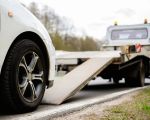
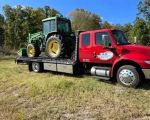
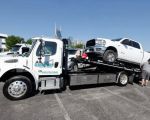
- Flatbed Trucks: For difficult-to-reach vehicles, flatbed trucks are often the best option. They allow the entire vehicle to be loaded onto the bed of the truck, preventing additional damage to the vehicle. This method is ideal when there’s limited space or the vehicle is stuck in a precarious position.
- Winches and Tow Straps: In situations where a vehicle cannot be directly accessed, winches and tow straps are used to pull the vehicle out of tight spots. The use of winches allows towing companies to pull vehicles from difficult positions without the need for extensive space or clearance.
- Wheel Lift Systems: This technique is often used in situations where there’s a need to lift one end of the vehicle. By utilizing a wheel lift system, towing companies can efficiently tow vehicles in narrow spaces while minimizing the risk of further damage to the vehicle’s undercarriage.
- Specialized Tow Trucks: Towing companies often have access to smaller, more maneuverable tow trucks for navigating tight spots. These trucks are designed to handle the challenges of small, narrow roads or areas where traditional towing vehicles might struggle.
By using the right combination of equipment and techniques, towing companies can navigate tight spaces and get vehicles out of difficult situations efficiently.
3. Case Study: A Real-Life Example of Towing in a Tight Spot
One of the most challenging towing jobs occurred when a customer’s vehicle got stuck in a narrow alleyway in downtown Anchorage. The alley was so tight that a standard tow truck couldn’t fit, and the vehicle was positioned awkwardly, making it even more difficult to access. The towing company’s crew used a flatbed truck to carefully load the vehicle, with a winch pulling it out inch by inch.
The team took great care to avoid damage to both the vehicle and nearby structures, and thanks to their expertise, the vehicle was safely towed without any issues. This case highlights the importance of choosing a towing company that has both the right equipment and the skills to handle difficult towing scenarios.
4. The Importance of Professional Equipment and Expertise in Difficult Towing Jobs
Professional equipment and expertise are essential when towing in narrow roads and difficult areas. Without the right tools, towing companies risk causing further damage to the vehicle or the surrounding environment. Some of the professional-grade equipment that ensures a successful towing job includes:
- Heavy-Duty Winches: These winches allow towing companies to pull vehicles out of tough spots, even when access is limited. They’re strong and can handle the weight of large vehicles.
- Flatbed Trailers: These trailers ensure that the vehicle is safely transported without causing additional strain on its suspension or undercarriage.
- Compact Tow Trucks: Smaller tow trucks can navigate tight spots with ease, ensuring that the vehicle is towed safely without causing damage to nearby property or other vehicles.
- GPS and Advanced Navigation Systems: Modern towing companies rely on GPS and advanced navigation systems to find the best route to difficult-to-reach locations. These tools help the crew avoid delays and get to the scene quickly.
The right equipment, combined with a team of trained professionals, is essential for ensuring that the towing job is completed quickly and without incident. It’s crucial for customers to rely on experienced towing services that invest in high-quality equipment for these complex tasks.
5. How to Choose the Right Towing Service for Your Needs
If you find yourself in need of towing services in a difficult-to-reach area, it’s essential to choose a reliable company that specializes in complex towing jobs. Look for a company that:
- Has Experience: Choose a towing company with experience in handling difficult towing scenarios, especially in narrow roads or areas with limited access.
- Uses Modern Equipment: Make sure the company uses up-to-date, professional-grade equipment to ensure that the job is done safely and efficiently.
- Offers 24/7 Services: Emergencies can happen at any time, so it’s important to choose a company that provides round-the-clock service to assist you whenever needed.
For reliable and professional towing services in Anchorage, contact Rescue & Towing. With years of experience and top-of-the-line equipment, they can handle even the most difficult towing jobs. Visit their website to learn more about their services or to schedule a tow.